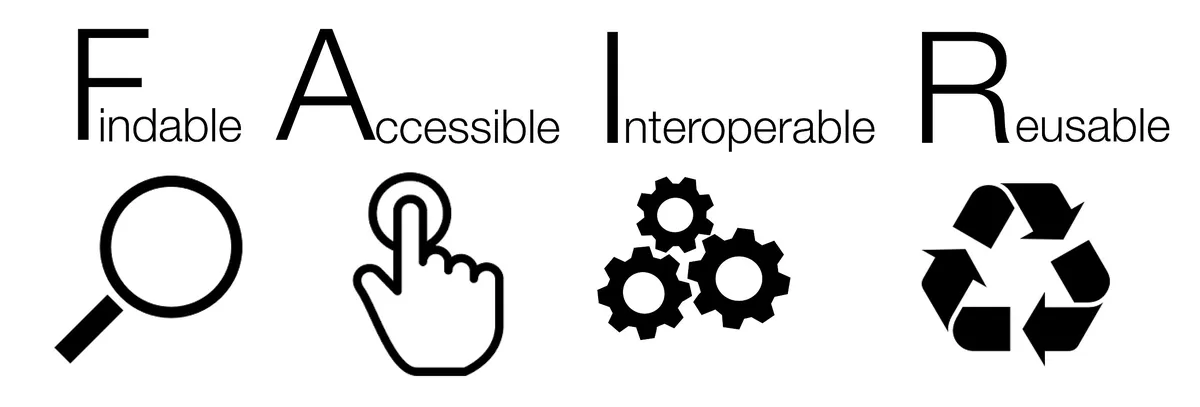
In today's data-driven world, research and innovation hinge on our ability to find, share, and use high-quality data. But what good is data if no one can find or use it? That's where the FAIR principles come in. Becoming FAIR-compliant isn't just a box-ticking exercise; it's a strategic move to maximize the impact of your research and data assets.
This guide will break down what FAIR means, where it came from, and why it's a game-changer for anyone working with data.
What are the FAIR Principles?
FAIR is an acronym that stands for Findable, Accessible, Interoperable, and Reusable. These four high-level principles are a set of guidelines to ensure that digital assets can be easily discovered and utilized by both humans and machines with minimal human intervention.
-
Findable (F): The first step in reusing data is being able to find it. To be findable, your data and its metadata (the data about the data) should be easy to discover. This means assigning it a globally unique and persistent identifier (like a DOI or an accession number) and indexing it in a searchable resource.
-
Accessible (A): Once found, users need to know how they can access the data, possibly including authentication and authorization. This principle doesn't necessarily mean the data has to be "open." It means the protocol for accessing it is clear and standardized. For example, the metadata should specify whether access requires a specific tool or a secure login.
-
Interoperable (I): Data needs to be able to work with other data. Interoperability means the data should use formal, accessible, and broadly applicable language for knowledge representation. This involves using standard vocabularies, ontologies, and formats that allow your data to be automatically combined and analyzed with other datasets.
-
Reusable (R): The ultimate goal of FAIR is to optimize data reuse. To be reusable, data and metadata must be richly described with a plurality of accurate and relevant attributes. It needs a clear license explaining the conditions of use and detailed provenance information so users understand where it came from and can trust it.
The Origin and Purpose of FAIR
The FAIR principles didn't just appear out of nowhere. They were born from a 2014 workshop in Leiden, the Netherlands, where a diverse group of scientists, publishers, and funding agencies gathered to address the growing challenge of data management. The outcome of this workshop was the "Guiding Principles for scientific data management and stewardship," first published in 2016 in Scientific Data.
The core purpose was to create a framework that would guide data producers and publishers to enhance the value of their data by making it more reusable. The problem was clear: vast amounts of valuable data were being lost or underutilized because they were poorly described, hard to find, and incompatible with other datasets. FAIR was created to provide a common-sense, actionable framework to combat this digital entropy and accelerate scientific discovery.
Why FAIR Compliance Matters: The Benefits
Adopting the FAIR principles offers significant advantages for everyone involved, from individual researchers to entire industries.
-
Increased Visibility and Citation: FAIR data is easier to find, which means it's more likely to be seen, used, and cited by other researchers, boosting your academic or professional impact.
-
Enhanced Collaboration: When data is interoperable and reusable, it breaks down silos and fosters collaboration between different research groups and organizations, leading to new insights and discoveries.
-
Greater Efficiency and Innovation: Researchers can save time and resources by reusing existing data instead of recreating it. This allows them to build on previous work and dedicate more effort to novel analysis and innovation.
-
Compliance with Funder Mandates: Many funding agencies, such as the National Institutes of Health (NIH) and the European Commission, now require or strongly encourage FAIR data practices for the projects they fund.
-
Future-Proofing Your Data: By adhering to FAIR principles, you ensure your data remains valuable and usable for future applications, many of which we can't even predict today.
How to Make Your Data FAIR
Achieving full FAIR compliance is a journey, not a destination. Here are a few practical steps to get started:
-
Use Rich Metadata: The more you describe your data, the better. Document everything: what the data is, who created it, when it was created, and how it was generated.
-
Choose the Right Repository: Deposit your data in a trustworthy, domain-specific, or general-purpose repository that assigns persistent identifiers (like a DOI) and has clear data access policies.
-
Use Standard Formats: Whenever possible, use open, well-documented file formats instead of proprietary ones. For example, use CSV instead of a specific software's format.
-
Apply a Clear License: Attach a usage license (like a Creative Commons license) to your data so users know exactly what they are and are not allowed to do with it.
By embracing the FAIR principles, you're not just organizing files; you're contributing to a more efficient, collaborative, and innovative global research ecosystem.